For Parents

Support for the moments that
don’t come with a script.

DP4 helps parents turn real-life challenges like meltdowns, transitions, routines, communication struggles, and emotional moments into personalized social stories, visuals, and supports made for their child.

Parenting a child with additional support needs can feel like trying to make the right decision with too much information and not enough time. You may already have therapist notes, school input, goals, and behavioral plans — but when something hard happens, parents do not have time to stop and dig through documents to figure out the best next step.

Social stories matter. They help children understand what happened, what to expect, what the safer or more appropriate next step looks like, and how to revisit a moment in a way that feels concrete and supportive. But hand-writing personalized social stories every time something new comes up is nearly impossible for most families.

On-the-fly support
Weekly stories + discovery
Visual schedules + communication cards

Built for real life, not ideal conditions

The hardest moments usually happen outside therapy, outside school, and far away from the neat examples most resources are built around. DP4 is designed for the moments families are actually navigating at home, in the car, after school, during routines, and in everyday life.

Not another folder full of things you mean to use later

Parents do not need more resources sitting somewhere untouched. They need support that feels usable, personal, and quick enough to matter when the moment is happening.

Why parents need something like DP4

Many parents are already doing everything they can. They are coordinating appointments, tracking routines, remembering what worked last time, talking with therapists and teachers, and trying to stay calm enough to help their child in the moment. The challenge is not that parents do not care. The challenge is that support is often hard to access when it is actually needed.

Behavioral plans can be helpful, but they are not always easy to use in real time. When your child is dysregulated, refusing a transition, struggling to communicate, or stuck in a routine that keeps going sideways, you do not have the luxury of reading through pages of notes and turning them into a warm, child-friendly script on the spot.

That is where DP4 comes in. We built it to help families turn real-life moments into supports that feel more understandable for kids and more manageable for parents — without expecting parents to hand-write a custom social story every time something new comes up.

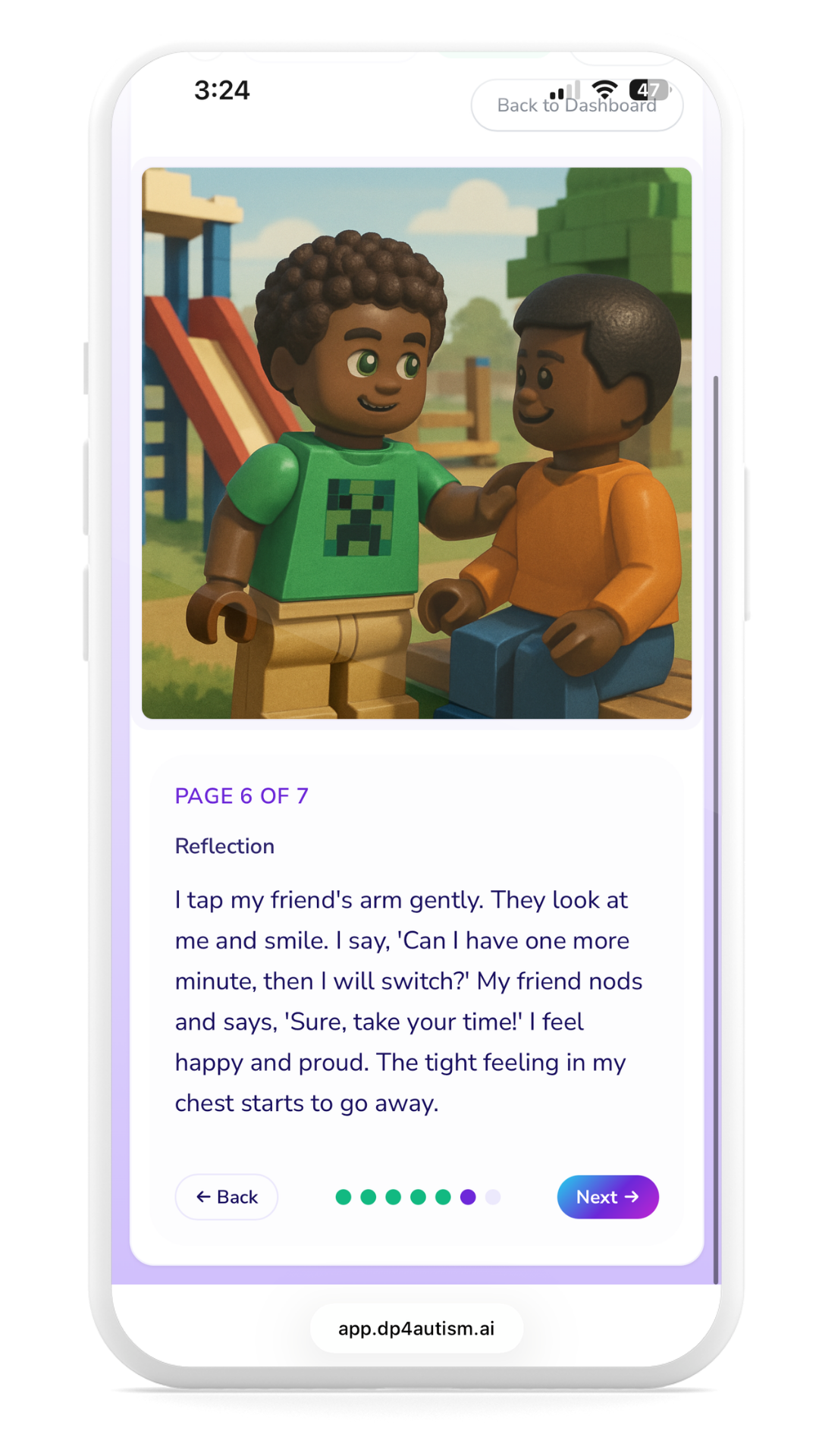
DP4 screen time visual shown on a phone

Screen time is inevitable. What matters is how we use it.

Kids under 8 average more than 2 1/2 hours of screen time a day. DP4 is built around the idea that while screen time happens anyway, it does not have to feel disruptive or disconnected from your child’s goals.

Instead, screen time can feel like a reward while still supporting communication, emotional understanding, routines, regulation, transitions, and the behavioral plans families are already trying to follow. DP4 is designed to help digital time do something more useful than just fill space.

DP4 on the fly support
1

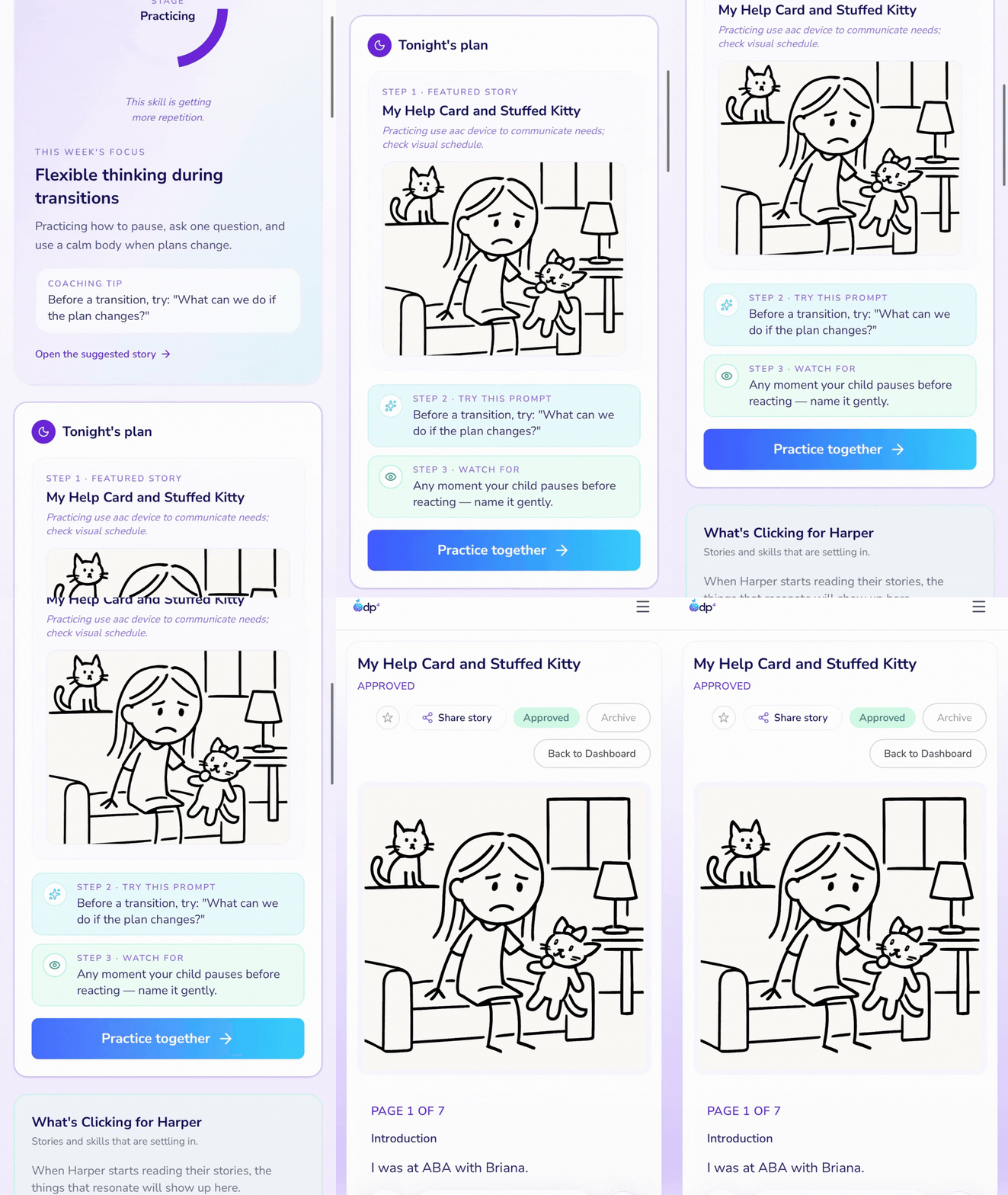
Use DP4 on the fly

When something hard happens right now — bedtime refusal, transition trouble, emotional overwhelm, conflict, fear, dysregulation, or a communication breakdown — DP4 helps you create support faster instead of starting from zero.

DP4 weekly stories
2

Generate stories on a weekly basis

Reinforce skills over time with weekly stories that support everyday routines, emotional understanding, expected behaviors, and the kinds of repeated situations that children often need extra practice with.

DP4 stories aligned to ABA training
3

Discover stories aligned to core ABA training

Explore story content connected to foundational ABA and developmental concepts so parents have a helpful starting point instead of a blank page every time.

DP4 visual schedules
4

Create custom visual schedules

Build visual supports for routines, transitions, and daily life in a way that feels more personalized and easier for children to connect with and revisit.

DP4 communication cards
5

Create communication cards

Make communication supports aligned to characters, visuals, and styles your child already loves so the tools feel more familiar and engaging instead of generic.

DP4 video fit check
6

Try our video fit check

Use our video fit check to get a better feel for whether DP4 is a strong fit for your child and how the current beta experience may support your family.

Why social stories matter — and why most parents cannot keep making them by hand

Social stories are powerful because they help children process what happened, understand what to expect, rehearse a safer or more successful path, and revisit moments with less pressure. They can make abstract expectations feel more concrete and easier to understand.

But the reality is that hand-writing a personalized social story every time a new challenge appears is not realistic for most families. Parents are already stretched thin. Even when they know social stories help, finding the time to write them, customize them, and revisit them consistently is hard.

DP4 exists to make that process feel possible again — more personalized than a generic worksheet, more practical than a resource buried in a folder, and more aligned to the real situations your child is actually facing.

Parent beta application

Sign up to try DP4 in beta before we charge.

We’re inviting a small group of parents to try DP4 early, use it in real life, and help shape what comes next.

We’re especially looking for parents who want support around routines, transitions, communication struggles, emotional regulation, everyday hard moments, and the situations that are hardest to explain after the fact.

Beta access is currently free. We’re looking for thoughtful parents who want early access, are open to trying the app in real life, and can share honest feedback as we continue building.

Free early beta access
Personalized tools built around your child’s real-life needs
Your feedback helps shape what we build next