
Summer is supposed to be a time of pure innocence for a child. Sunny days at the pool, late nights biking in the neighborhood cul-de-sac, and moments with friends we’ll never forget.
But let’s face it: Summer, for parents, is pure chaos, and within just a few weeks many of us are left hanging by a thread. Here’s a bit of honesty for you, from our founder, who doesn’t necessarily hold back all the time:
Summer also brings something many autistic children struggle with: unpredictability.
Summer can feel completely different.
Camp schedules change weekly. Vacation plans disrupt routines. Rain moves activities indoors. Different caregivers step in. Pick-up times vary. Even exciting events can feel overwhelming when a child doesn’t know what to expect.
That’s why visual schedules are one of the most effective tools families can use during the summer months.
What Is a Visual Schedule?
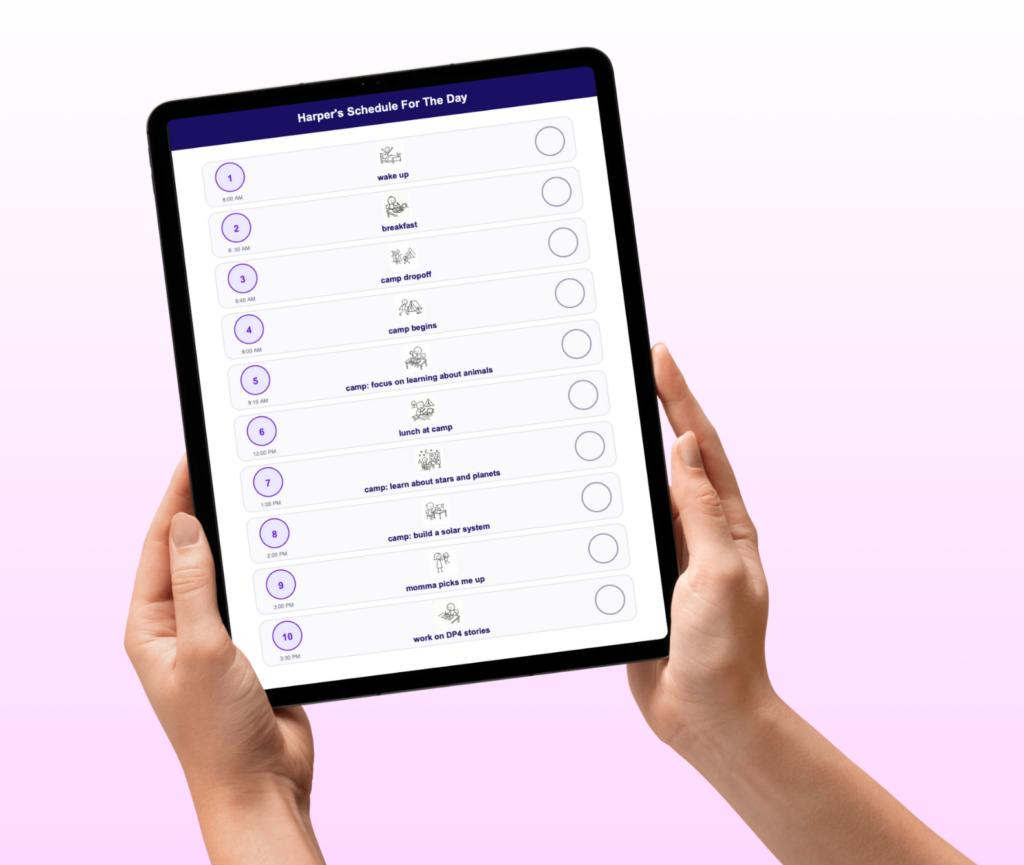
A visual schedule uses pictures, icons, photos, or words to show a child what will happen throughout their day.
Rather than relying on spoken instructions alone, a child can see the sequence of events in front of them.
According to the Indiana Resource Center for Autism, visual schedules provide a predictable sequence of activities that can help individuals on the autism spectrum increase independence and better manage anxiety. They create a clear structure for the day and reduce reliance on verbal reminders.
Why Summer Makes Visual Schedules Even More Important
For many autistic children, the hardest part of summer isn’t camp itself, but the constant change.
One day may include swimming and playground time. The next day might be a field trip. The following week may have an entirely new counselor and schedule.
When children don’t know what’s coming next, anxiety often increases.
The Raising Children Network explains that visual schedules help autistic children understand what is happening, what comes next, and when routines change. This predictability can reduce anxiety and help children cope more successfully with transitions.
A visual schedule gives children a roadmap.
Instead of wondering:
- What are we doing today?
- When will Mom pick me up?
- What’s happening after lunch?
They can simply look at their schedule.
Making Transitions Easier
Transitions can be challenging for any child.
For autistic children, moving from a preferred activity to a non-preferred activity can sometimes trigger frustration, resistance, or emotional dysregulation.
Visual schedules help because they clearly show both the current activity and the next activity.
Research and guidance from the Indiana Resource Center for Autism describe visual schedules as a way to support transitions by making expectations visible rather than relying entirely on spoken language.
Instead of hearing:
“Five more minutes and we’re leaving.”
A child can see:
Swimming → Lunch → Crafts → Pick-Up
That visual certainty can make a significant difference.
Supporting Independence
One of the most powerful benefits of visual schedules is that they allow children to navigate parts of their day independently.
Rather than waiting for an adult to provide constant reminders, children can check their schedule and determine what comes next.
The Indiana Resource Center for Autism specifically identifies increased independence as one of the major benefits families report after implementing visual schedules at home.
Over time, this can help build confidence, self-management skills, and greater participation in daily routines.
An Evidence-Based Tool That Works
Visual schedules aren’t simply a popular strategy.
They are considered an evidence-based practice for supporting individuals on the autism spectrum.
Research finds that visual schedules can be effectively used across age groups, settings, and skill levels to increase participation and independence.
They are widely used in homes, schools, therapy clinics, and community settings because they help transform abstract concepts like time, transitions, and expectations into something concrete and understandable.
Creating Visual Schedules in Minutes with DP4
Traditionally, creating visual schedules meant searching for images, printing cards, cutting materials, and rebuilding schedules every time plans changed. But really, who has time for that?!
That’s why we built visual schedules into DP4.
In just a few minutes, parents can create personalized visual schedules for:
- Summer camp
- Vacations
- New babysitters
- Doctor appointments
- Family outings
- Back-to-school transitions
The schedule can be customized to your child’s needs while providing the predictability and structure that helps them feel confident and prepared.
In the video below, you’ll see an example of a visual schedule created inside DP4. Instead of spending hours building materials by hand, parents can generate a personalized schedule and start using it immediately.
Small Tool. Big Difference.
Visual schedules may look simple.
But for many autistic children, they provide something incredibly powerful: certainty.
When children know what to expect, anxiety decreases. Transitions become easier. Independence grows.
And during the ever-changing routines of summer, that can make all the difference.
Try your first visual schedule for this summer when you sign up for your first free month of DP4. And let’s hope we all get through the next few weeks with a little less chaos and panic.
