April is Autism Awareness Month.
And this is something I’ve hesitated to share publicly for a while.
Not because it isn’t important.
But because once you say it out loud, it becomes very real.
I didn’t build this because I wanted to.
I built it because I had to.
What happens when your child is diagnosed with autism?
I know just as well as you do. Everything changes. Fast.
Not in a clean, structured way. Not with a clear plan.
It looks more like:
- Waitlists that stretch for months
- Therapy schedules that take over your calendar
- Insurance calls that go nowhere
- Constant adjustments to your work, your time, your expectations
At one point, a doctor told me:
“You may want to reconsider your career.”
I didn’t.
But I also didn’t know how I was supposed to keep it. And frankly, I failed.
What working parents of neurodivergent children actually experience

When I was still working in a corporate role, my son Danny came with me to the office more times than I can count.
Especially during the summer.
He’d sit in my office with books, Legos, and a tablet while I tried to stay present in meetings, respond to emails, and keep everything moving.
People were kind.
But they didn’t see:
- The coordination behind every therapy appointment
- The lack of consistent childcare options
- The fact that this wasn’t a convenience—it was a necessity
They saw a child in an office.
They didn’t see everything it took to make that moment possible.
Why traditional support systems don’t work for working parents
There’s a gap that doesn’t get talked about enough.
Most systems are built on the assumption that you have:
- Flexible time
- Additional support
- The ability to step away from your career if needed
For many families, especially dual-income households or single working parents, that simply isn’t true.
So you adapt.
You find ways to make it work, even when it feels like there isn’t a workable solution.
The problem I couldn’t solve with existing tools
One of the hardest parts wasn’t just logistics. It was communication.
How do you explain real-life situations to your child in a way that actually helps them understand what happened?
Not general advice.
Not generic scripts.
But something that reflects:
- The exact situation
- The emotions involved
- The behavior that followed
And then helps them understand:
- Why it happened
- What they were feeling
- What they can do differently next time
I couldn’t find anything that did that well.
So I started building it.
What is DP4?
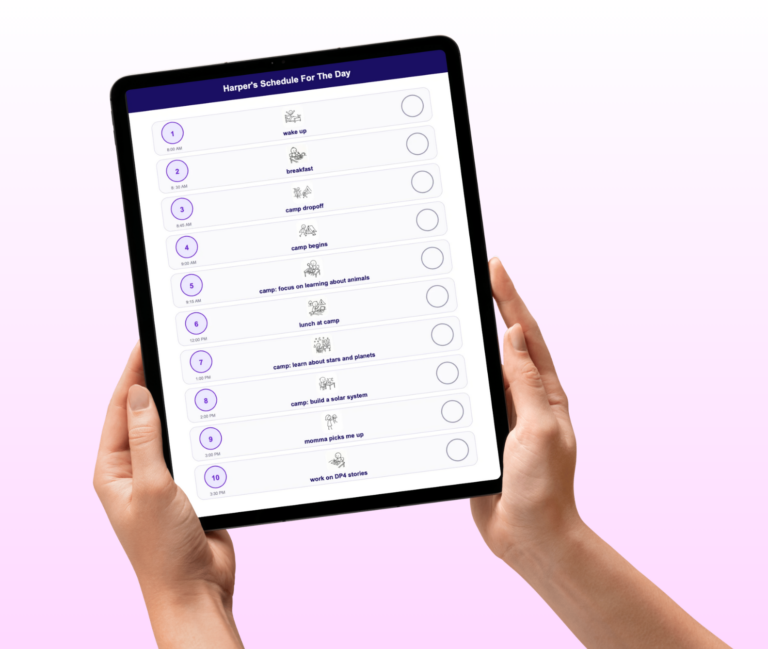
DP4 is a platform that turns real-life moments into personalized social stories for children.
It helps kids understand:
- What happened in a situation
- Why it happened
- What they can do next time
The goal is simple: make learning feel relevant, clear, and grounded in their actual experiences.
Not abstract. Not clinical.
Something they recognize as their own.
Do personalized social stories help children with autism and ADHD?
Yes—because children learn best from context they recognize.
Research and real-world application both point to a few key factors:
- Familiar scenarios improve comprehension
- Repetition builds confidence and reduces anxiety
- Emotional connection increases retention
When a child sees themselves in a story, it becomes easier to process what happened and apply it the next time.
What we’re seeing in early use
In early beta, one trend stood out:
Many parents are reporting a noticeable shift away from relying on short-form video as a primary calming tool.
Instead, children are engaging with stories that reflect their own experiences.
That shift matters.
Because it replaces passive consumption with something that actively supports understanding and development.
Why I’m sharing this now
This started as something I built out of necessity.
Not as a product idea.
Not as a business plan.
But as a way to solve a problem I was facing every day.
If you’re navigating something similar, you know how isolating it can feel.
And how often it feels like you’re expected to figure it out on your own.
Continue reading on Substack
I share more of the personal side of this journey—including what building this has looked like in real time, the challenges behind it, and the moments that made it necessary.
Read the full story here:
https://kimpitsko.substack.com/p/i-didnt-build-this-because-i-wanted
If this resonates
If you’re a parent balancing work, therapy schedules, and everything in between, you’re not alone.
And if something like this would be helpful, you can learn more about DP4 and join the beta.